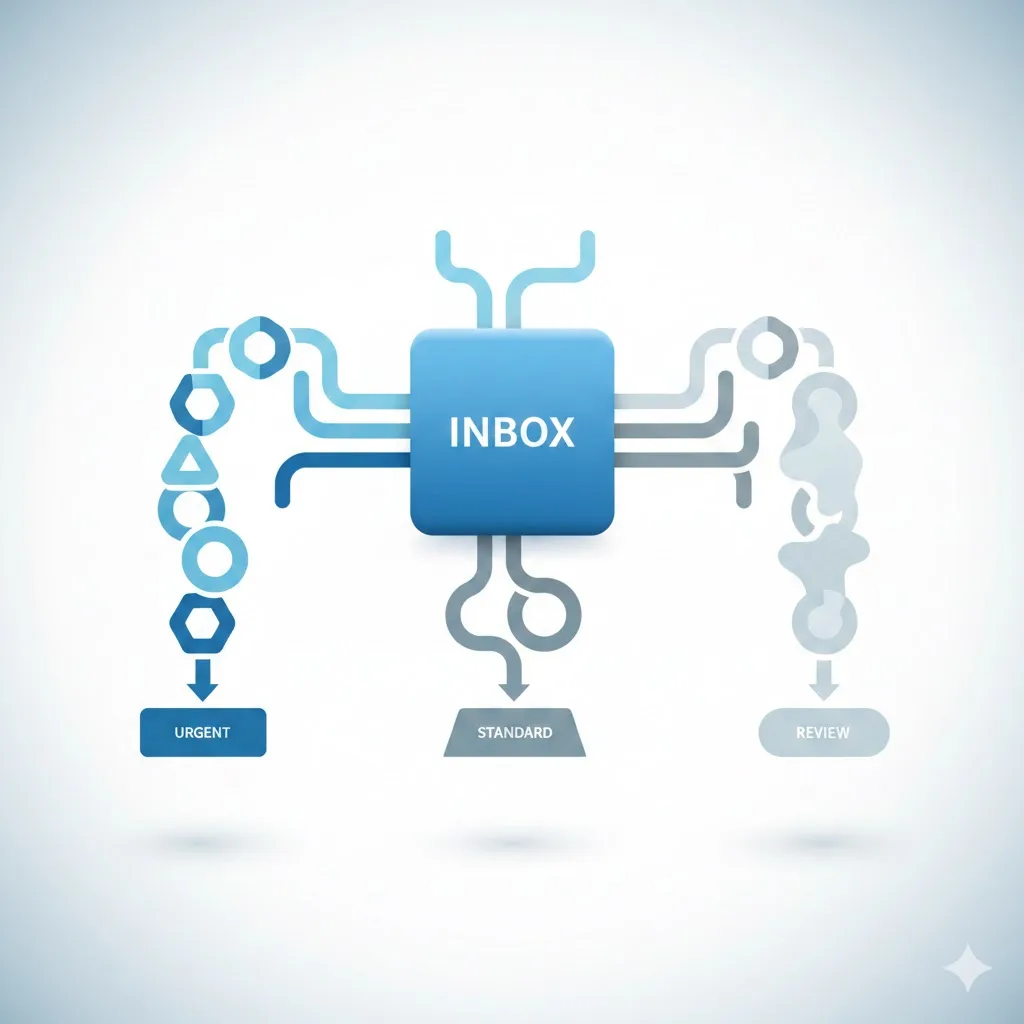
This plan gives you a systematic complaints handling process built around triage, structured analysis, and theme tracking. You'll implement a claims-and-harms framework that turns every complaint into actionable intelligence, with clear severity ratings that determine your investigation approach.
This is the kind of structured governance that gets noticed in CQC inspections, demonstrates leadership capability to partners, and turns a reactive burden into a proactive improvement system. Complaints handling sits across the Responsive and Well-led domains. Getting it right shows you understand both operational delivery and organisational learning.
AI has changed what lands in your complaints inbox. Patients now use ChatGPT and similar tools to draft their complaints. The volume is higher, the letters are longer, and every complaint reads like it was written by a solicitor. The informal signals that used to help you gauge urgency (the care someone put into composing a letter, the rawness of their language) have largely disappeared. You need a system, not instinct.
Implementation timeframe: 6-8 weeks from kick-off to first audit cycle
Why This Matters
For Your Practice
Managing increased volume: AI-assisted complaint writing is likely lowering the barrier to complaining. That's not entirely bad. Patients who previously lacked the confidence or literacy skills to articulate their concerns now have a voice. But your current process probably wasn't designed for this volume or this level of uniformity.
Restoring signal from noise: When every complaint is 2,000 words of fluent prose, you can't skim-and-prioritise the way you used to. A structured claims-and-harms decomposition gives you back the ability to distinguish a minor service grumble from a serious safety concern buried in polished language.
CQC readiness: Complaints handling is assessed under both the Responsive and Well-led domains. CQC inspectors will ask for a 12-month summary of all complaints with actions taken and learning implemented. A theme register and monthly review meeting give you exactly that evidence.
Reducing PHSO escalations: The Healthwatch "A Pain to Complain" report (January 2025) found that more than half of complainants were dissatisfied with how their complaint was handled. Systematic triage, timely acknowledgment, and structured responses directly address the most common causes of escalation.
Duty of Candour compliance: A proper triage system catches complaints that contain patient safety incidents requiring Duty of Candour notification, something that's easy to miss when complaints are processed reactively.
For Your Professional Development
By leading this improvement, you'll demonstrate:
System design: Building a triage framework with severity ratings and tiered response pathways, a transferable skill for any operational improvement
Change management: Delegating complaint handling away from the practice manager while maintaining quality and governance, showing you can scale operations
Regulatory expertise: Applying NHS Complaints Regulations 2009, PHSO Complaint Standards, and CQC Regulation 16 requirements to a practical operational system
Data-driven governance: Using theme analysis and trend data to drive practice improvement, not just resolve individual complaints
Quality improvement: Implementing audit cycles that measure process quality, not just response times
Add this to your year-end evaluation: "Designed and implemented a structured complaints triage system with claims-and-harms analysis, reducing average processing time by [X]%, achieving 100% 3-day acknowledgment compliance, and establishing monthly theme reviews that drove [specific improvement]."
Prerequisites and Preparation
⚠️ Complaint already past deadline? If you have an active complaint approaching or past the 20-working-day response window, deal with that first. Contact the complainant, explain the delay, agree a revised timeline, and document the conversation. Then return to this plan for systematic improvement. An honest late response is always better than silence.
What You Need Before Starting
Approvals: Partner agreement to delegate daily triage to a trained team member (not necessarily the practice manager), and agreement on the severity framework that determines investigation depth
Stakeholders: Identify your Complaints Lead (overall accountability, likely practice manager), triage handler (the person who will process complaints daily or weekly), GP Partner (clinical complaint review), and Registered Manager (governance oversight)
Resources: Staff time for the triage handler (30-60 minutes per triage session depending on volume), monthly meeting slot (1 hour) for theme review
Current state: Pull your last 12 months of complaints. How many? What categories? What's your acknowledgment compliance? What's your average response time? You need this baseline.
Estimated Time Investment
Total implementation: 6-8 weeks from kick-off to first audit
Your time per week: 3-4 hours in weeks 1-4 (setup), dropping to 1-2 hours ongoing
Triage handler time: 2-4 hours per week ongoing (depends on complaint volume)
Staff training: 3 hours total (1 hour triage handler, 1 hour clinical staff, 1 hour whole team)
Monthly theme review meeting: 1 hour
The Implementation Plan
Phase 1: Kick-Off and Planning (Week 1-2)
Meeting 1: Initial Kick-Off
Attendees: Practice Manager, GP Partner, Registered Manager, proposed triage handler, admin supervisor
Duration: 60 minutes
Agenda:
Present the problem. Share your 12-month complaint data. Show the volume trend. If you don't have clean data, that's the problem. NHS Digital data shows primary care complaints have been rising year-on-year, and AI-assisted complaint writing appears to be accelerating the trend.
Introduce the triage framework. Present the claims-and-harms model (see Phase 2) and how severity ratings will determine investigation depth. This replaces gut-feel prioritisation with a structured, auditable approach.
Agree delegation. The triage handler doesn't need to be the practice manager. An experienced administrator or deputy manager can process complaints through the framework, escalating clinical or high-severity issues appropriately.
Set timeline. Week 2: documents finalised; Week 4: triage handler trained; Week 6: system live; Week 8: first audit.
Identify blockers. No current complaints log? No acknowledgment template? No way to track themes? These are your week 1 priorities.
Outputs:
Agreement on triage handler and their protected time allocation
Baseline data from past 12 months (or acknowledgment that data is poor, which is itself a finding)
Timeline with clear ownership of each deliverable
Action: Create Your Document Package
You'll need these documents to support your complaints system:
Policy: Complaints Policy, establishing your legal framework under NHS Complaints Regulations 2009 and CQC Regulation 16, including timescales, roles, and rights
SOPs:
Complaint Investigation Process: step-by-step investigation within the 20-working-day window
Learning from Complaints: quarterly theme analysis and action planning
PHSO Escalation Process: handling escalations to the Ombudsman
Forms:
Complaints Log: central register from receipt to closure
Complaint Investigation Template: structured investigation form for formal complaints
Complaints Learning Summary: quarterly analysis template for theme reporting
Audits:
Complaints Quarterly Assurance Checklist: compliance verification covering acknowledgment times, investigation quality, and learning capture
You can generate a tailored document package by emailing mypm@automate.mypracticemanager.co.uk with your practice size and complaint volume, use the AI document tools for step-by-step visual creation, or browse the compliance library for pre-built templates.
For manual implementation: Create similar documents ensuring you address the NHS Complaints Regulations 2009, CQC Regulation 16 (receiving and acting on complaints), and PHSO NHS Complaint Standards. The PHSO publishes a model complaint handling procedure and sample templates.
Phase 2: Document Development and Review (Week 2-4)
This is where you build the three components that make this system work: the auto-acknowledgment, the claims-and-harms triage framework, and the theme register.
Action: Customize Documents for Your Practice
Start by adapting the template documents from Phase 1 to your practice:
Review templates. Understand the full complaints lifecycle: policy sets framework, SOPs provide step-by-step procedures, forms capture evidence
Add practice details. Practice name, Complaints Lead name and contact, GP Partner for clinical complaints, Registered Manager, PHSO contact details
Customize workflows. Adapt investigation procedures to match your clinical system (EMIS, SystmOne), specify your escalation pathway for serious complaints, confirm who reviews clinical complaints
Clinical review. GP Partner confirms clinical investigation procedures are appropriate
Operational review. Practice Manager confirms triage workload is realistic with current staffing
If you're using My Practice Manager, email mypm@automate.mypracticemanager.co.uk with your existing document attached and customisation notes, or use the AI document tools for visual editing. Always review AI-generated content against your practice's specific context before finalising.
Now build the three components that make this system distinctive:
Component 1: Auto-Acknowledgment Template
Design a standard acknowledgment that goes out immediately (within 3 working days is the legal requirement, but aim for same-day or next-day). It should include:
Thank the patient for contacting the practice
Confirm receipt with a reference number (format: COMP-YYYY-NNN)
Set expectations: "We aim to respond fully within 20 working days"
Provide escalation information: "If you have an immediate safety concern or medical emergency, please contact the practice directly on [phone number] or call 999"
Mention their right to NHS Complaints Advocacy support
Confirm next steps: "A member of our team will review your concerns and may contact you to discuss how you'd like us to handle your complaint"
This can be sent automatically from your email system, or as a manual template the triage handler sends when logging each complaint. Either way, it must go out within 3 working days, no exceptions.
Component 2: Claims-and-Harms Triage Framework
When the triage handler reads each complaint, they do four things:
Step 1: Safety screen. Before anything else: does this complaint contain an immediate safeguarding concern, a medical emergency, or a serious patient safety incident? If yes, stop the normal process and escalate immediately to the GP Partner or Registered Manager. This is non-negotiable.
Step 2: Decompose into claims and harms. Strip the complaint down to its specific allegations and their impacts:
# | Claim (what allegedly happened) | Harm (impact on patient) |
|---|---|---|
1 | "Receptionist refused to book an appointment" | Patient couldn't access care for 3 days |
2 | "Doctor dismissed my symptoms" | Patient felt unheard and anxious |
3 | "Referral was never sent" | 6-week delay in specialist treatment |
This is critical with AI-drafted complaints. A 2,000-word letter might contain two actual claims wrapped in extensive context. The decomposition strips away the polish and shows you what you're actually dealing with.
Step 3: Rate each claim and each harm.
Claim severity: how serious is the alleged action or inaction?
Rating | Level | Examples |
|---|---|---|
1 | Service issue | Long wait, administrative error, rude interaction |
2 | Process failure | Lost referral, wrong appointment, miscommunication |
3 | Care quality concern | Felt dismissed, inadequate examination, poor explanation |
4 | Safety concern | Wrong medication, missed diagnosis, delayed treatment |
5 | Serious safety or safeguarding | Abuse allegation, gross negligence, discriminatory treatment |
Harm severity: what impact did the patient experience?
Rating | Level | Examples |
|---|---|---|
1 | Inconvenience | Minor disruption, had to call back |
2 | Distress | Emotional upset, anxiety, loss of confidence |
3 | Temporary harm | Short-term health impact, delayed treatment with recovery |
4 | Significant harm | Lasting health impact, prolonged suffering |
5 | Severe harm | Permanent damage, life-threatening, death |
Step 4: Determine the response pathway. Add the highest claim rating and highest harm rating to get a combined score:
Combined Score | Pathway | Investigation Approach |
|---|---|---|
2-4 | Standard | Triage handler investigates, brief written response, learning noted |
5-7 | Enhanced | Full investigation per SOP, detailed response from Complaints Lead, action plan documented |
8-10 | Serious | Senior clinical review, potential Duty of Candour, Significant Event Analysis, Registered Manager oversight |
This means a claim-4 harm-1 complaint (safety concern but no actual harm) still gets enhanced investigation. The claim severity alone warrants it. And a claim-1 harm-4 complaint (minor service issue but significant impact) also triggers enhanced investigation, because the harm matters regardless of how mundane the cause.
Component 3: Complaint Theme Register
Create a simple spreadsheet or database tracking each complaint's category and sub-theme:
Categories (based on the NHS KO41b reporting categories and HCAT research framework):
Category | Sub-themes |
|---|---|
Clinical | Diagnosis, treatment, medication, referral, examination |
Access | Appointment availability, telephone, online consultation, triage decision, home visit |
Communication | Explanation, listening, written communication, information sharing |
Staff conduct | Attitude, behaviour, professionalism, dignity |
Administration | Records, letters, registration, repeat prescriptions |
Facilities | Premises, parking, cleanliness, accessibility |
Tag each complaint with one primary category and sub-theme at the point of triage. This takes seconds and builds the dataset you need for monthly theme analysis. Over time, you'll see patterns: "We've had 8 access complaints about online triage decisions this quarter" tells you something specific and actionable.
Meeting 2: Document Review Session
Attendees: Implementation team plus triage handler
Duration: 90 minutes
Agenda:
Walk through the triage process end-to-end using 3-4 real past complaints
Test the claims-and-harms decomposition: does it work in practice?
Calibrate severity ratings: does the team agree on what constitutes a 3 vs a 4?
Review the auto-acknowledgment template
Approve documents for training
Outputs: Approved triage framework, calibrated severity ratings, acknowledgment template ready to use
Phase 3: Staff Training and Communication (Week 4-6)
Action: Deliver Structured Training
Triage handler training (1 hour, your most important session):
Work through 5-6 real complaints from your last 12 months
Practice claims-and-harms decomposition for each one
Apply severity ratings and discuss borderline cases
Walk through the safety screening process (what triggers immediate escalation)
Practice theme categorisation
Review the auto-acknowledgment process and timescales
Clinical staff training (1 hour):
How complaints reach them (only enhanced and serious pathway complaints)
Their role in investigation (providing clinical context, reviewing records)
How to respond to patients during investigation (continue normal care, don't discuss complaint details)
Duty of Candour triggers and their obligations
Whole team briefing (1 hour):
New process overview: what's changing and why
Everyone's role: how to receive a complaint (verbal or written), who to pass it to, what not to do (don't promise outcomes, don't apologise on behalf of colleagues, don't discuss with other patients)
The positive framing: complaints are information. The increase in volume partly reflects patients who previously couldn't articulate concerns now being able to. That's valuable intelligence for improving the practice.
PHSO escalation rights: every response must include information about the patient's right to escalate to the Parliamentary and Health Service Ombudsman
Communication timeline:
Week 4: Triage handler. Intensive 1:1 training with Practice Manager (the critical session)
Week 5: Clinical staff. Focused session on their investigation role and Duty of Candour
Week 5: Whole team briefing. Process overview, roles, receiving complaints
Week 6: Mop-up sessions for anyone who missed initial training
Ongoing: New starter induction includes complaints process module
Training materials to prepare:
Triage handler pack: claims-and-harms worksheets, severity rating reference card, theme category list, escalation flowchart
Clinical staff pack: investigation procedure summary, Duty of Candour trigger checklist, record review guidance
Quick reference cards: laminated cards for reception showing who to pass complaints to, what to say, what not to promise
Common Q&A sheet: "What if a patient complains verbally?", "Can I apologise?", "What if the complaint is about me?", "How long do we have to respond?"
Engagement tips:
Use real anonymised examples from your own practice. Staff engage more with complaints they recognise
Show how structured handling protects staff as well as patients (no more personal blame, systematic investigation instead)
Acknowledge that complaints are stressful. The system reduces stress by providing a clear process, not adding burden
Celebrate when the system catches something the old process would have missed
Using AI Safely for Complaint Responses
AI can help draft complaint responses, but it needs guardrails. The MDU (September 2024) specifically warned about risks including inaccurate content, confidentiality breaches, and generic apologies that patients identify as insincere.
If you want to use AI for drafting responses, you need:
A policy statement. Partner-approved agreement that AI may be used as a drafting aid, with mandatory human review before sending
Anonymisation before input. Strip all patient-identifiable information before entering complaint details into any AI tool. Replace names with "[Patient]", remove dates of birth, NHS numbers, addresses. This is a UK GDPR requirement.
Human review and personalisation. The AI draft is a starting point. The Complaints Lead must review for accuracy, add specific details from the investigation, personalise the tone, and ensure it addresses every claim specifically.
No AI for serious pathway complaints. Combined score 8-10 complaints require fully human-authored responses reviewed by the Registered Manager. The reputational and legal risk is too high for AI involvement.
Using My Practice Manager's complaint response tool: Email mypm@automate.mypracticemanager.co.uk with an anonymised summary of the complaint and investigation findings. You'll receive a structured draft you can personalise. Alternatively, use the complaint response generator on the web tools.
Phase 4: Go-Live and Monitoring (Week 6-8)
Action: Implement the Triage System
Launch approach:
Set the triage schedule. For most practices, daily processing works best. The triage handler checks the complaints inbox at a set time (e.g., 9:30am), processes any new complaints through the framework, sends acknowledgments, and flags escalations. High-volume practices may need a second check in the afternoon. Low-volume practices may find twice-weekly is sufficient, but never less than every 3 working days (to meet the acknowledgment deadline).
Establish the workflow:
Complaint received → logged in complaints register with reference number
Auto-acknowledgment sent (same day or within 3 working days maximum)
Safety screen completed (immediate escalation if triggered)
Claims and harms decomposed and rated
Theme category and sub-theme assigned
Routed to appropriate pathway (standard, enhanced, or serious)
Investigation commenced per pathway requirements
Response drafted, reviewed, and sent within 20 working days
Position the triage handler for success. Protected time in their schedule, quiet workspace for reading complaints, clear escalation contacts, authority to route standard pathway complaints without practice manager sign-off.
Set up recurring tasks to maintain the rhythm:
Daily: Check complaints inbox and process new complaints (triage handler)
Weekly: Review complaint register for overdue responses (Complaints Lead)
Monthly: Run theme analysis for monthly governance meeting (Complaints Lead)
Quarterly: Complete complaints quarterly assurance audit (Practice Manager)
Use My Practice Manager task tracking or your existing system to schedule these as recurring reminders.
Key metrics to track from Week 6:
Acknowledgment compliance: Target 100% within 3 working days (legal requirement under NHS Complaints Regulations 2009)
Response compliance: Target 95% within 20 working days
Triage completion: Target 100% of complaints decomposed into claims/harms with severity ratings
Theme tagging: Target 100% of complaints categorised with primary theme and sub-theme
Escalation appropriateness: Serious pathway complaints flagged within 24 hours of receipt
PHSO escalation rate: Target below 5% of total complaints
Early warning signs to watch for:
Acknowledgments going out on day 3 (no buffer, so you'll miss the deadline when someone is absent)
Triage handler defaulting everything to "standard" pathway to avoid escalation
Claims-and-harms decomposition being skipped ("too busy"). This is the core of the system
Theme register not being updated. Data quality degrades fast
Phase 5: Review and Continuous Improvement (Month 2-3)
Monthly Theme Review Meeting
This is the meeting that turns complaints into improvement. Schedule it as a standing monthly agenda item.
Attendees: Complaints Lead, GP Partner, triage handler, admin supervisor
Duration: 1 hour
Agenda:
Volume and timeliness. How many complaints this month? Acknowledgment and response compliance percentages.
Theme analysis. What are the top 3 complaint categories this month? Any emerging sub-themes? How does this compare to previous months?
Claims-and-harms patterns. Are we seeing clusters of similar claims? Are harm ratings trending in any direction?
Pathway distribution. What percentage went standard vs enhanced vs serious? Is the distribution realistic?
Actions and learning. What changes should we make based on this month's data? Assign owners and deadlines.
Share with PPG. Prepare an anonymised summary for the Patient Participation Group (quarterly).
Outputs: Meeting minutes documenting themes discussed, actions agreed, and owners assigned. This is your CQC evidence of learning from complaints.
Meeting 3: First Formal Review
When: 6 weeks after go-live
Attendees: Full implementation team plus frontline staff representative
Agenda:
Review metrics against targets: acknowledgment compliance, response times, triage completion rates
Assess the triage framework. Are the severity ratings working? Do they need recalibrating? Are borderline cases being handled consistently?
Evaluate the triage handler. Workload manageable? Quality of decomposition? Appropriate escalation decisions?
Review theme data. Even 6 weeks of structured data reveals patterns. What's your top complaint category?
Adjust and plan. Refine any procedures that aren't working, set next review date
Outputs:
Performance dashboard: acknowledgment compliance %, response time compliance %, triage completion rate, pathway distribution breakdown
Action plan for any procedure adjustments with owners and deadlines
Triage handler development plan: areas of strength, areas needing calibration support, any additional training required
Communication to partners: brief report showing system is operational, metrics are tracked, and learning is being captured
Evidence package: training records, meeting minutes, metrics dashboard, theme register, all ready for CQC
Action: Conduct First Formal Audit
Using the Complaints Quarterly Assurance Checklist:
Sample 10-15 complaints from the past 6 weeks
Check acknowledgment compliance. Was every complaint acknowledged within 3 working days? Evidence in the log?
Verify triage quality. Were claims and harms decomposed? Were severity ratings assigned? Was the pathway appropriate?
Assess investigation quality. For enhanced and serious pathway complaints, was the investigation thorough? Were all claims addressed in the response?
Review theme tagging. Were complaints categorised consistently? Does the theme register match the complaint content?
Check learning capture. For each complaint, is there documented learning? Were actions completed?
Outputs:
Audit report with compliance percentages for each criterion
Action plan for any gaps found
Assessment of triage handler's performance and development needs
Evidence package ready for CQC
Common Problems and Solutions
Problem 1: "All the AI-drafted complaints look the same and we can't tell who's genuinely distressed"
Why this happens: AI normalises emotional expression. A patient who spent an hour agonising over their email and a patient who typed three sentences into ChatGPT both produce similar-looking formal letters.
How to address it:
Stop trying to read emotional signals from the text. The claims-and-harms framework deliberately removes this subjectivity. You assess what allegedly happened and what impact it had, not how eloquent the letter is.
When you contact the complainant to discuss handling (which the Regulations require you to offer), that conversation reveals genuine distress far more reliably than any written complaint.
Focus on the substance. A polished AI letter about a missed cancer referral is more serious than a handwritten note about car parking, regardless of how either reads emotionally.
Prevention: Train the triage handler to assess claims and harms on their merits, not on writing quality. Calibrate regularly with real examples.
Problem 2: "We don't have time to decompose every complaint into claims and harms"
Why this happens: It feels like extra work layered on top of an already busy process. The triage handler sees a long complaint and thinks "this will take ages to break down."
How to address it:
Most complaints contain 2-4 actual claims. The decomposition takes 5-10 minutes per complaint once you're practised, less time than reading and re-reading a long complaint trying to figure out what to do.
Use the email assistant: forward the anonymised complaint text to
mypm@automate.mypracticemanager.co.ukwith "Extract the specific claims and harms from this complaint". You'll get a structured breakdown in 1-2 minutes.For standard pathway complaints (combined score 2-4), the decomposition is the investigation. You've identified the claims, assessed severity, and can draft a proportionate response. You're not adding work. You're replacing unstructured thinking with a structured approach that's faster once embedded.
Prevention: Time the process for the first month. Show the triage handler their average decomposition time versus their old average handling time. The structured approach is usually faster.
Problem 3: "The person we delegated triage to isn't confident making severity judgments"
Why this happens: Severity rating feels like a clinical or legal decision. The triage handler worries about getting it wrong and either over-escalates everything (creating bottlenecks) or under-escalates (missing serious issues).
How to address it:
Provide clear examples for each rating level. Build a calibration document with 2-3 anonymised examples per severity level that the handler can reference.
Build in a safety net: any complaint where the handler is unsure gets escalated to the Complaints Lead for a second opinion. This is expected behaviour, not failure.
Review the handler's ratings weekly for the first month. Discuss any where you'd have rated differently. This builds calibration rapidly.
Prevention: Quarterly calibration sessions where the team rates 5-6 example complaints independently, then discusses differences. This keeps ratings consistent as staff change.
Problem 4: "Staff are resistant to having complaints discussed at monthly meetings"
Why this happens: Complaints feel personal. Staff worry they'll be named and blamed. Monthly meetings feel like they're amplifying negatives.
How to address it:
Theme meetings discuss patterns, not individual complaints or staff. The agenda is "We had 6 access complaints about triage decisions this month, what's driving that?" not "Dr Smith had 3 complaints."
Frame complaints as free consultancy. Patients are telling you, at no cost, exactly where your service falls short. Practices pay thousands for patient surveys that deliver the same information.
Include positive data. How many compliments did you receive? What's your resolution rate? What improvements came directly from complaint learning?
Prevention: Establish the tone in the first meeting. The Complaints Lead sets the example by presenting data without blame and focusing discussion on system improvements.
Success Criteria and Evidence
You'll Know You've Succeeded When:
100% acknowledgment compliance: Every complaint acknowledged within 3 working days, logged with reference number, and complainant offered discussion about handling
95% response within 20 working days: With clear documentation where extensions were agreed with the complainant
All complaints triaged with claims-and-harms: 100% of complaints decomposed, rated, and routed to the appropriate pathway
Theme register is populated and current: Every complaint tagged with category and sub-theme, data used in monthly review
Monthly theme meetings happening: With documented minutes, actions, and owners, creating a continuous CQC evidence trail
Reduced PHSO escalations: Below 5% of total complaints, with zero escalations caused by poor handling
Triage handler confident and calibrated: Consistent severity ratings verified through quarterly calibration exercises
Evidence You Can Show to CQC:
Documentation:
Approved complaints policy and SOPs with version control
Complaints register with full lifecycle tracking (receipt → acknowledgment → triage → investigation → response → learning)
Claims-and-harms analysis for every complaint demonstrating structured, proportionate investigation
Training records for triage handler, clinical staff, and whole team
Data and trends:
12-month theme analysis showing complaint categories, sub-themes, and trends
Acknowledgment and response time compliance (tracked monthly)
Pathway distribution (standard/enhanced/serious) showing appropriate triage
Actions completed from complaint learning, with evidence of service improvements
Governance evidence:
Monthly theme meeting minutes with documented actions and owners
Quarterly audit reports with compliance scores and improvement plans
PPG engagement with anonymised complaint summaries (quarterly)
Annual complaints report ready for ICB submission
Staff and patient evidence:
Triage handler can describe the claims-and-harms process and demonstrate consistent severity rating
Reception staff can explain how to receive a complaint and who to pass it to
Clinical staff can describe their role in complaint investigation and Duty of Candour triggers
Patient feedback on the complaints process (post-resolution survey or follow-up)
Compliments received as a result of improvements driven by complaint learning
Maintaining the Improvement
Daily/weekly activities (2-4 hours depending on volume):
Triage processing: Handler checks complaints inbox at scheduled time, processes new complaints through claims-and-harms framework, sends acknowledgments, flags escalations
Response tracking: Review complaints register for any approaching the 20-working-day deadline, chase investigation progress, arrange extensions with complainants where needed
Safety screening: Ensure all new complaints have been screened for safeguarding, medical emergency, or serious safety concerns before entering normal triage
Monthly activities (2-3 hours):
Theme review meeting: 1-hour standing meeting reviewing complaint categories, sub-themes, trends, and patterns. Document actions and owners in meeting minutes.
Compliance metrics: Calculate acknowledgment compliance %, response time compliance %, triage completion rate. Flag anything below target.
Action tracking: Review actions from previous month's theme meeting. Are they completed? Have they made a difference?
Register maintenance: Ensure all complaints are tagged with theme category and sub-theme. Clean up any inconsistencies in categorisation.
Quarterly activities (3-4 hours):
Formal audit: Complete the Complaints Quarterly Assurance Checklist: sample 10-15 complaints, verify triage quality, check investigation thoroughness, review learning capture
Triage handler calibration: Rate 5-6 example complaints independently with the handler, then discuss any rating differences. This keeps severity assessments consistent.
PPG summary: Prepare anonymised complaints summary for Patient Participation Group: themes, trends, actions taken, improvements made
Partner report: Present quarterly complaints dashboard to partners showing volumes, themes, response times, and learning outcomes
Annual activities (4-6 hours):
Policy review: Full review of complaints policy and SOPs, update for any regulatory changes, partner sign-off on revised documents
Refresher training: All staff complete complaints process refresher (1 hour), including updated scenarios and any procedure changes
12-month theme analysis: Deep-dive review of complaint patterns across the full year. Identify systemic issues, measure whether actions have reduced complaint themes, benchmark against previous year
Annual complaints report: Prepare report for ICB submission and internal governance, including KO41b data return, learning summary, and improvement evidence
Embedding the change:
New starter induction: Every new team member completes complaints handling module, including how to receive complaints, who to pass them to, and what not to say
Make it routine: Triage becomes as automatic as checking emails. The handler processes complaints at their scheduled time without needing to be reminded
Success stories: When a complaint leads to a genuine service improvement, share it with the team. "A patient complained about our triage questions, we reviewed the script and three other patients have since thanked us for the change."
Continuous improvement: Use audit findings and theme data to refine the system. If the severity ratings need recalibrating, recalibrate them. If a new complaint category keeps appearing, add it to the register.
Additional Resources
My Practice Manager Tools
Email Compliance Assistant Get help throughout your implementation, from generating complaint handling documents to extracting claims and harms from anonymised complaints. Response in 1-2 minutes, no login required.
AI Document Tools Generate customized complaints policies, investigation templates, and response drafts. The complaint response generator is particularly useful for drafting standard and enhanced pathway responses.
Task Management Set up daily triage checks, weekly overdue reviews, monthly theme meetings, and quarterly audits. Creates the evidence trail CQC expects.
Compliance Library Browse complaints management templates and related compliance documents, with built-in regulatory citations and CQC mappings.
Related Improvement Plans
Related improvement plans covering complementary patient safety, governance, and clinical quality topics are in development.
Regulatory Guidance and Standards
NHS Complaints Regulations 2009. Primary statutory framework for complaints handling
CQC Regulation 16: Receiving and Acting on Complaints. What CQC requires from providers
CQC GP Mythbuster 103: Complaints Management. What inspectors actually look for
PHSO NHS Complaint Standards. Model procedures and expectations
PHSO Principles for Remedy. Six principles for appropriate remedies
Healthwatch: A Pain to Complain (2025). Current landscape and patient experience data
NHS England Primary Care Complaints Toolkit. Practical resources for primary care
Getting Help
Questions about this improvement plan? Email: info@mypracticemanager.co.uk Subject: "Complaints Handling Plan Query: [Your Practice Name]"
Need support with implementation? Book a consultation to discuss your specific practice context, complaint volumes, and triage framework design.
This improvement plan is provided as practical guidance for GP practice managers implementing structured complaints handling systems. While based on current regulatory requirements (NHS Complaints Regulations 2009, CQC Regulation 16, PHSO NHS Complaint Standards), you should exercise professional judgment and adapt recommendations to your practice's specific circumstances and complaint volumes. For legal advice, consult appropriate professionals. Always ensure AI-generated complaint responses are reviewed for accuracy and anonymised appropriately before any patient data is used.